






“A goal without a plan is just a wish.”
This well-known quote by French writer Antoine de Saint-Exupéry perfectly captures the idea behind this article.
Setting goals for each employee is essential for the sustainable growth of any organization. But for goals to be truly effective, understood, and embraced, they must be the result of careful planning, open discussion, and a clear overall vision.
Through our work helping hundreds of organizations digitize their performance management processes, we have identified 13 best practices for defining employee goals.
We believe these insights can help support the growth and development of your people.
1. Align Individual Goals with Company Objectives
Always maintain a strong link between your employees’ individual goals and the company’s overall objectives. This not only helps employees feel more involved in the organization’s success and see the impact of their work, but also ensures that everyone is moving in the same direction.
If bonuses or incentives are involved, many organizations also include company-level goals in the evaluation process. These typically relate to achieving a specific revenue target or financial result.
This strategy serves two purposes. On the one hand, it ensures that the company grants variable compensation only when it can afford to do so; in other words, when positive financial results have been achieved. On the other hand, it further encourages employees to contribute to the company’s success.
2. Consider Colleagues and Team Dynamics
An employee’s goals are closely connected to those of their colleagues. Before discussing objectives with the individual employee, analyze the situation of the entire team so that you can create a balanced set of goals that support and reinforce one another.
In Management by Objectives (MBO) processes, it often makes sense to include team goals as well. For example, a customer success team might have the objective of resolving 1,000 support tickets in a year while meeting the company’s SLA standards. Team goals encourage collaboration and motivate colleagues to support one another more actively.
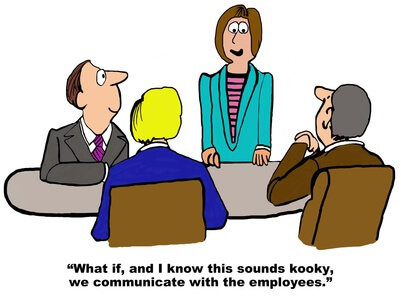
3. Agree on Goals with Employees
Come to the discussion prepared with your own proposal, but be ready to discuss and negotiate it with the employee. Goals that are negotiated rather than imposed from the top down are accepted more positively and are seen as motivating challenges rather than constraints.
In addition, open discussion often brings new ideas and improvements to light. After all, employees frequently have a clearer understanding than their managers of what constitutes a realistic target for their daily activities.
4. Define SMART Goals
The SMART acronym (Specific, Measurable, Achievable, Relevant, Time-bound) frequently appears in discussions about performance evaluation and Management by Objectives. It identifies the key characteristics that employee goals should have in order to support business performance effectively. Goals should therefore be clearly defined, measurable in numerical terms, achievable for the employee, relevant to the business, and tied to a clear timeframe.
For example, an account manager should not simply have a general goal of “increasing sales,” but rather a specific target such as: “increase sales to new companies in the Lombardy region by 5% during the first two quarters of 2026.”
However, be careful not to define goals that focus too narrowly on only one aspect of the job, as this can unintentionally influence employee behavior. In the example above, if a salesperson’s objectives focus solely on acquiring new clients, they may neglect relationships with existing customers.
5. Link Goals to Tangible and Intangible Rewards
Employees who successfully achieve their goals should be recognized and rewarded.
However, a motivating reward does not necessarily have to be monetary. In many cases, non-financial incentives can be even more meaningful, such as additional paid time off, a new office, expanded responsibilities, or a promotion.
By defining different levels of performance and corresponding rewards, you will also be able to identify employees who consistently strive to improve year after year.

6. Pay Special Attention to New Hires
Assigning clear goals to new employees is also an excellent way to help them understand what is expected of them.
We recommend starting to define these goals as soon as the need for a new role emerges. They can also support the recruitment and selection process, helping to identify the right candidate and refine the job description.
Once the new employee has joined the company, goals can then be refined and adjusted according to their specific skills and characteristics.
For this reason, goal setting should be an integral part of the onboarding process.
7. Review and Update Goals Regularly
During the year, internal or external events may lead to necessary adjustments. For example, if an unexpected and significant reduction in the marketing and advertising budget occurs, it may become necessary to revise sales targets downward.
Over time, some goals may even lose relevance due to unforeseen circumstances. Do not hesitate to replace them with more appropriate objectives. Doing so demonstrates ongoing attention to the needs of your people.
During the pandemic in 2020, for example, many companies quickly revised both individual and corporate goals to reflect the new global context.
8. Monitor Every Development
Whatever tool you use to evaluate employees, remember to keep track of every change or update to the goals that have been set.
This information is essential for end-of-year evaluations and for defining goals for the following year.
Sometimes the goals themselves may remain unchanged while other factors evolve, such as changes in an employee’s role or responsibilities, or shifts in market conditions. Any element that influences performance should be documented.
9. Maintain Maximum Transparency
Transparency is essential in any employee evaluation process. Each employee should actively participate in the goal-setting phase and always have full visibility into any changes made during the year. You may also consider including a self-assessment as part of the evaluation process.
Self-assessment adds complexity and requires additional effort from employees — who may initially feel uncomfortable with the exercise — but it also provides significant benefits. Employees feel more valued and involved, while gaining an opportunity for meaningful self-reflection.

10. Celebrate Every Milestone
Rewarding employees when final goals are achieved is important, but there are additional ways to strengthen engagement.
For example, recognize and celebrate excellent work when intermediate milestones are reached.
For this reason, it is advisable to schedule at least a mid-year review, if not quarterly check-ins. This allows managers to congratulate employees who are performing well and provide support and encouragement to those who may be falling behind.
11. Analyze the Results Achieved
At the end of the evaluation cycle, review the results achieved.
If you are using performance management software, you will have access to a wealth of data that can be used to generate both quantitative and qualitative reports. This makes it possible to analyze what worked well and learn from any mistakes.
In MBO evaluations, the software can also calculate the percentage of goal completion and the payout due to each employee.
This makes defining goals for the following year even more accurate and effective!
12. Turn Failure into an Opportunity for Growth
Sometimes goals are not achieved. In these situations, it is important not to place blame solely on the employee but to analyze the reasons behind the outcome and learn from it.
Employee evaluation processes serve precisely this purpose: identifying gaps and inefficiencies within the organization and addressing them. This may involve implementing training programs, redistributing responsibilities, investing in new technologies, or revising internal processes.
The analysis may also reveal that the problem lay in the original definition of an unrealistic goal, which is an important lesson to keep in mind when defining objectives for the following year.
13. Use Performance Management Software
Transparency, collaboration, historical tracking, and reporting are difficult to achieve without the support of employee performance management software.
Using such tools simplifies and accelerates the work of HR teams and managers while providing greater control over evaluation processes and reward distribution.
At the same time, adopting a modern and interactive platform sends a clear message to employees: people development and merit-based recognition are central to the company’s strategy, and employees play a key role in achieving it.